
How Much Does an Espresso Basket Change Your Grind Size?
Axel · August 4, 2026
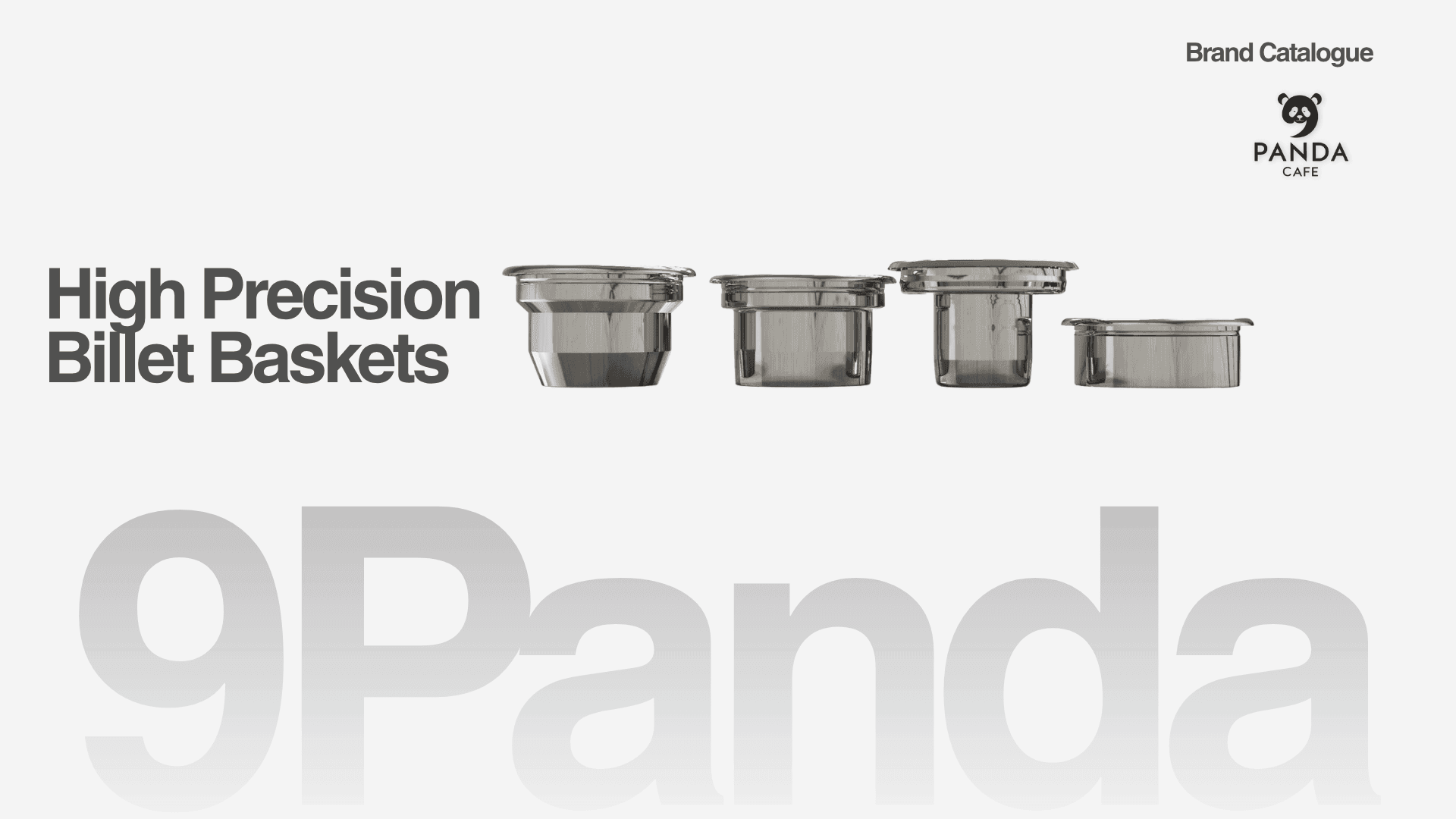
A while back, we managed to pull surprisingly syrupy espresso using a Pietro Brew Burr paired with a convex basket. It wasn't something we expected, and it raised an interesting question: how much influence does the basket actually have? Most conversations about baskets revolve around clarity, body, or extraction, but very little attention is given to how dramatically they can change the grind size needed to reach the same shot. That curiosity eventually turned into this experiment. We gathered every 17-4PH basket from 9Panda, along with a few other baskets we already had, and compared them under the same brew target. Rather than asking which basket tastes the best, we wanted to answer a much simpler question: how much does changing only the basket change the grind required to hit the same shot?
Why We Did This Test
Espresso equipment has become increasingly expensive, and most people aren't in a position to buy several baskets just to see which one works best with their grinder. While every basket is designed with a different goal in mind, there isn't much data showing how those designs affect the rest of the brewing process. Our hope is that this comparison gives people a better starting point. Instead of treating baskets as random accessories, this data may help narrow down which basket is more likely to complement the equipment you already own. It isn't about finding a universally "better" basket—it's about finding one that moves your setup closer to the style of espresso you're trying to brew.
Test Setup
To make the comparison meaningful, every basket was tested using the same brew target. The only variable that changed was the grind size. Each basket was dialed in until it reached the target parameters below.
| Parameter | Value |
|---|---|
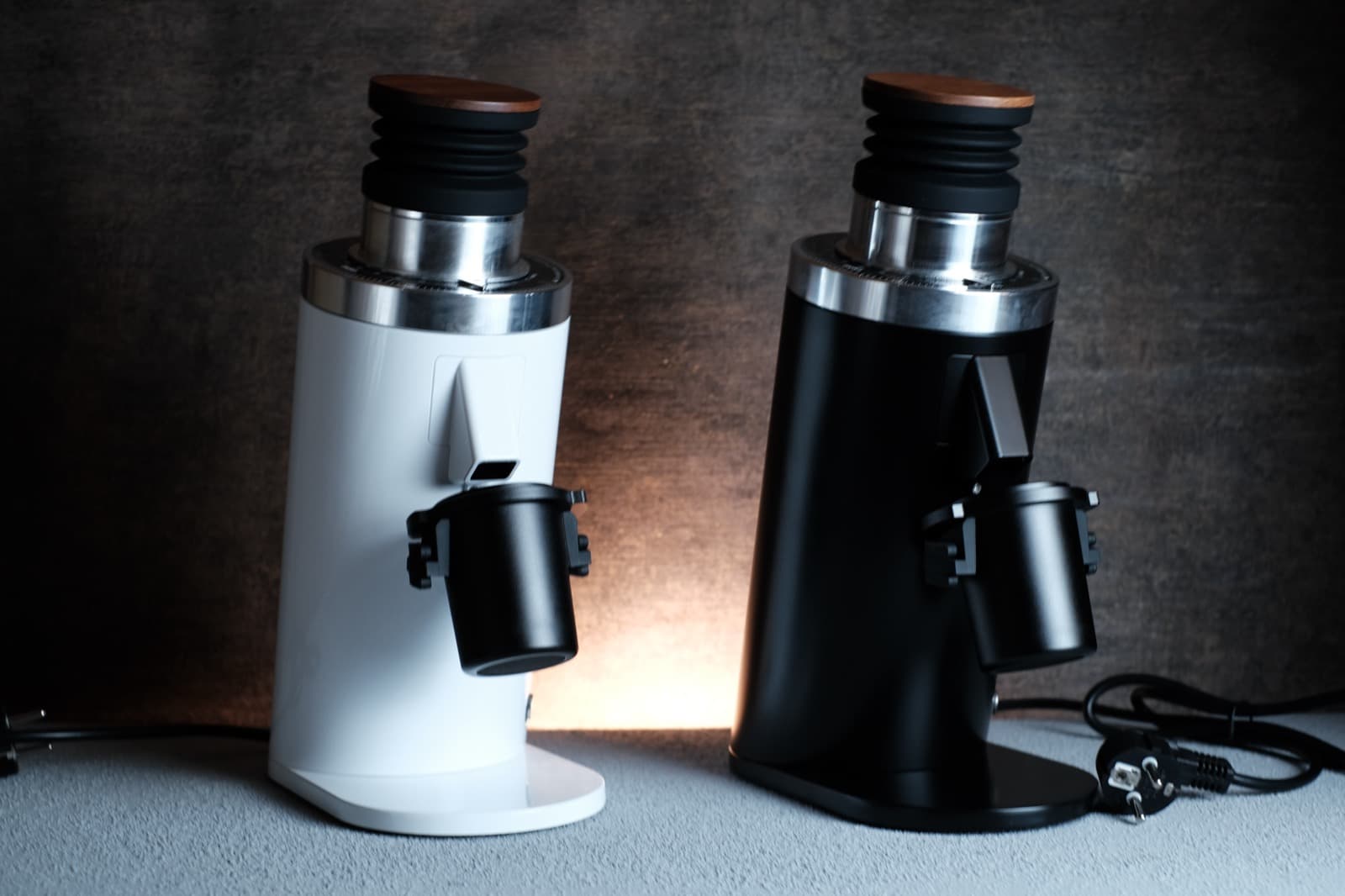
| Grinder | DF64 Gen II |
| Burrs | 64 mm SSP High Uniformity |
| Pressure | Flat 9 bar |
| Dose | 18 g (9 g for the Single Dose basket) |
| Ratio | 1:2 (±10%) |
| Temperature | 90 °C |
Grind settings were recorded using a vernier-style dial. Although the dial allows 0.1-click increments, measurements were rounded to 0.5-click increments to make the results easier for others to reproduce. Approximate burr gap values are also included as a reference.
Methodology
The purpose of this experiment was not to optimize every basket individually. Doing so would defeat the point of the comparison because each basket naturally favors different recipes and extraction styles. Instead, we kept the target constant. For every basket, we adjusted only the grind size until it produced approximately the same pressure profile, ratio, shot time, and brewing temperature. By normalizing the brew target, the resulting grind differences become much easier to compare.
Results
The data below shows the grind setting required for each basket to reach the same brew target.
| Basket | Dose | Grind Setting | Burr Gap Equivalence |
|---|---|---|---|
| 9panda 58mm 3000 Holes | 18 g | 12.5 | 132.6 micron |
| 9panda 49mm Stepdown 2000 Holes (w/ dedicated spring) | 18 g | 16.5 | 174.9 micron |
| 9panda 49mm Triple Stepdown 750 Holes (w/ dedicated spring) | 18 g | 18.5 | 196.1 micron |
| 9panda 58mm to 32mm Convex | 18 g | 21.5 | 227.9 micron |
| 9panda 35mm Single Dose 500 Holes | 9 g | 18.0 | 190.8 micron |
| IMS 58mm B702TCH28.E (stamped) | 18 g | 13.5 | 143.1 micron |
| Ikape Convex (largest size) | 18 g | 19.5 | 206.7 micron |
| Mischief Spirit (high extraction stamped) | 18 g | 12.5 | 132.5 micron |
One of the more interesting observations is just how wide the grind range becomes while chasing an identical shot profile. Depending on the basket, the grinder required substantially different settings despite every other brewing parameter remaining unchanged.
What This Means
One common assumption is that changing baskets results in only small adjustments to the grinder. Our testing suggests the differences can be much larger than expected. In some cases, the required grind shifts enough that simply swapping baskets without redialing would produce a completely different shot. This also explains why basket changes often feel inconsistent. Two baskets can produce similar-looking espresso while requiring noticeably different grind settings to get there.
Limitations
Like any experiment, these results are specific to the equipment used. The data was collected using a DF64 Gen II fitted with 64 mm SSP HU burrs, and different burr geometries or coffees will almost certainly change the absolute grind settings. More importantly, this should not be interpreted as the recommended recipe for any of these baskets. Every basket has its own design philosophy, and many will perform best under different pressures, ratios, doses, or temperatures. The goal here was simply to compare how much the required grind changes when everything else stays constant.
Conclusion
Perhaps the biggest takeaway isn't that one basket is better than another. It's that basket choice has a much larger influence on your workflow than many people expect. If changing a basket can significantly shift the grind needed to hit the same target, then it also becomes another tool for shaping how your current setup behaves. Hopefully, this data helps you make a more informed decision before buying another basket. If it saves someone from purchasing several baskets just to find the one that suits their setup, then the experiment has already served its purpose.
Keep reading
Product Guides
Basket, Puck Prep, dan Crema: Mana yang Terbukti, Mana yang Cuma Klaim
Precision basket, puck screen, WDT, basket step-down. Sebagian punya dasar terukur, sebagian masih klaim produsen. Kami pisahkan mana yang mana — termasuk untuk produk yang kami jual sendiri.
Rituals · July 21, 2026
Product Guides
DF64 vs DF54: Memilih Grinder Espresso Tanpa Terjebak Angka
Diameter burr besar belum tentu lebih seragam, dan RPM tinggi bukan jaminan apa-apa. Kami bandingkan dua grinder single dose di katalog kami berdasarkan yang benar-benar terukur: workflow, panas, dan retensi.
Rituals · July 21, 2026